
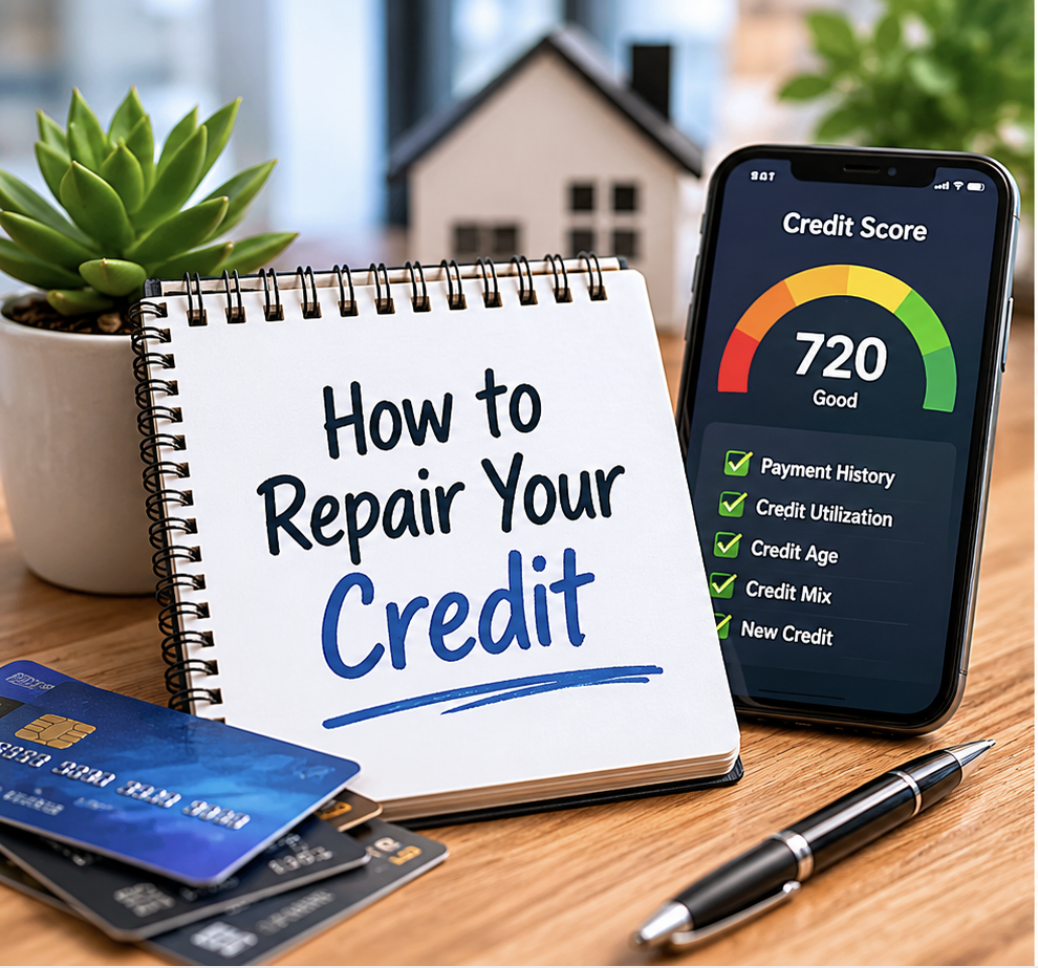
Bad credit follows you into every room. The mortgage broker calls to say your application was declined. The apartment manager says the unit went to another applicant. Your car insurance renewal arrives 40 percent higher than last year. A job offer disappears after the background check. In each case, the underlying cause is the same: a credit report that does not tell an accurate story about who you are.
What makes this painful is that a significant portion of credit reports contain errors. A 2021 study by the Consumer Financial Protection Bureau found that millions of consumers have errors on their credit files that they are not even aware of. The items dragging down your score may not represent anything you actually did. They may be a case of mistaken identity, a furnisher's failure to report account corrections, a collection account that has aged past its legal reporting period, or a balance that was paid but never updated.
Most of what people believe about credit repair is incomplete or wrong. They believe the bureaus are accurate. They believe that if an item says verified, there is nothing more to do. They believe only people with perfect financial histories can have good credit. None of these assumptions is supported by the law.
I am Joeziel Vazquez, founder and CEO of Credlocity Business Group LLC. I hold FCRA Certified Professional, Board Certified Credit Consultant (BCCC), Certified Credit Score Consultant (CCSC), and Certified Credit Repair Specialist (CCRS) credentials. In 17 years of credit repair practice, my team and I have worked with more than 79,000 clients across all 50 states. I have seen every type of credit error, every bureau tactic, every furnisher strategy. I have personally overseen FCRA disputes, CFPB complaint escalations, and referrals to FCRA litigation counsel in cases where consumer rights were willfully violated. This guide is written from that experience, not from a blog post.
By the time you finish reading this guide, you will understand: what credit repair actually is under federal law; every right you have under the FCRA, CROA, FDCPA, and CFPA; how to execute a complete 10-step credit dispute process; how to evaluate whether a credit repair company is legitimate; what AI credit repair can and cannot do; how to find the best credit repair services for your situation; and what to do when bureaus and furnishers violate your rights.
What Is Credit Repair and How Does It Actually Work?
Under federal law, a credit repair organization is defined at 15 U.S.C. Section 1679a(3) as any person who provides services for the purpose of improving a consumer's credit record, credit history, or credit rating, or provides advice or assistance to a consumer for that purpose, in exchange for the payment of money or other valuable consideration. This is the legal definition, and it is important because the law that governs credit repair organizations, the Credit Repair Organizations Act (CROA), flows from this definition.
What credit repair actually is: the process of identifying information on your credit report that is inaccurate, unverifiable, or outdated, and exercising your federal rights under the Fair Credit Reporting Act to have that information corrected or removed. The FCRA at Section 1681i gives you the right to dispute any information in your credit file that you believe is inaccurate or incomplete. The credit bureau must conduct a reasonable investigation, typically within 30 days, and delete or correct any information it cannot verify.
What credit repair is not: debt settlement, which involves paying creditors less than the full amount owed; bankruptcy, which is a legal proceeding to discharge or restructure debts; credit counseling, which involves budgeting advice and debt management plans; or any process that creates a new credit identity or fabricates a new credit history. These are fundamentally different services. A company that conflates credit repair with debt settlement or credit counseling is either confused or deceptive.
The AI credit repair trend deserves specific attention because it is one of the fastest-growing segments of the industry. AI-powered platforms can automate significant portions of the dispute process: scanning your credit report for potential errors, generating dispute letter templates customized to your specific items, tracking investigation deadlines, and monitoring score changes. For straightforward errors on relatively clean credit files, AI tools can accelerate the process meaningfully.
Where AI credit repair reaches its limits is in the legal analysis that separates adequate disputes from maximally effective ones. Metro 2 format compliance violations require knowledge of the credit reporting industry's data standard that most AI systems do not possess. Furnisher escalations under FCRA Section 1681s-2(b), where the legal leverage often lies, require human judgment about when and how to escalate. Complex identity theft cases involving mixed files, fraudulent accounts across multiple bureaus, and potential litigation require an FCRA-certified specialist who can evaluate not just what to dispute, but what legal violations have occurred and what remedies are available.
The most effective approach to credit repair services in 2026 combines AI efficiency for the initial scan and simple items with FCRA-certified human expertise for everything that requires legal analysis, strategic judgment, and the kind of institutional knowledge that only comes from working thousands of cases over many years. That combination is what Credlocity has built over 17 years and 79,000 clients.
Your Complete Consumer Rights Under Federal Credit Law
Your rights as a consumer in the credit reporting system are not favors granted by the bureaus. They are federal law. Understanding them is the foundation of everything else in this guide.
The Fair Credit Reporting Act (FCRA) — 15 U.S.C. Section 1681 et seq.
The FCRA is the primary federal statute governing the consumer credit reporting industry. Enacted in 1970 and substantially amended multiple times, it regulates what information can be reported, how long it can be reported, and what rights consumers have to access and dispute that information.
- Section 609 (15 U.S.C. Section 1681g): Your right to access your complete credit file. You may request your full file disclosure from each bureau at any time.
- Section 611 (15 U.S.C. Section 1681i): Your right to dispute inaccurate information. The bureau must conduct a reasonable investigation within 30 days of receiving your dispute, or up to 45 days if you submit additional information during the investigation period. If the information cannot be verified, it must be deleted.
- Section 612 (15 U.S.C. Section 1681j): Your right to a free annual credit report from each bureau. AnnualCreditReport.com is the only FTC-authorized source.
- Section 613 (15 U.S.C. Section 1681k): Disclosure requirements for investigative consumer reports used by employers.
- Section 615 (15 U.S.C. Section 1681m): Requirements on users of consumer reports. If you are denied credit, employment, insurance, or housing based on your credit report, the user must send you an adverse action notice identifying the bureau that provided the report.
- Section 616 (15 U.S.C. Section 1681n): Civil liability for willful noncompliance. If a bureau or furnisher willfully violates your FCRA rights, you are entitled to actual damages, statutory damages of $100 to $1,000 per violation, punitive damages, and attorney's fees and court costs.
- Section 617 (15 U.S.C. Section 1681o): Civil liability for negligent noncompliance. Actual damages and attorney's fees.
- Section 623 (15 U.S.C. Section 1681s-2): Duties of furnishers of information. Section 1681s-2(a) imposes accuracy obligations on furnishers. Section 1681s-2(b) imposes an independent duty on furnishers to investigate consumer disputes after receiving notification from a credit bureau. This is the section most commonly overlooked and most valuable to consumers.
- Section 605 (15 U.S.C. Section 1681c): Reporting time limits. Most negative information may not be reported after 7 years. Chapter 7 bankruptcy may be reported for 10 years. These periods are measured from specific dates under the statute.
- Section 605B (15 U.S.C. Section 1681c-2): Identity theft protections. If you are a victim of identity theft, bureaus must block fraudulent information within 4 business days of receiving your identity theft report.
The Credit Repair Organizations Act (CROA) — 15 U.S.C. Section 1679 et seq.
CROA regulates companies that provide credit repair services. Its key provisions protect you from fraudulent operators:
- Section 1679b: Prohibited practices. No credit repair company may charge advance fees before services are performed. No credit repair company may make false statements about your credit history or advise you to make false statements. No credit repair company may guarantee specific results.
- Section 1679c: Required disclosures before signing. The company must provide a written Consumer Credit File Rights statement explaining your FCRA rights.
- Section 1679d: Written contract requirements. Your contract must specify services, cost, and time frame.
- Section 1679e: Three-day right to cancel. You may cancel any credit repair contract within three business days without penalty, regardless of what the contract says.
The Fair Debt Collection Practices Act (FDCPA) — 15 U.S.C. Section 1692 et seq.
- Section 1692g: Debt validation rights. Within 30 days of a debt collector's initial contact, you may request written validation of the debt. The collector must cease collection activity until it provides the validation.
- Section 1692e: Prohibition on false, deceptive, or misleading representations by debt collectors.
- Section 1692f: Prohibition on unfair or unconscionable collection practices.
The Consumer Financial Protection Act (CFPA) — 12 U.S.C. Section 5481 et seq.
The CFPA established the Consumer Financial Protection Bureau, which has authority to supervise and enforce the FCRA, CROA, and FDCPA. You can file complaints at consumerfinance.gov/complaint. CFPB complaints create a formal federal record that often changes bureau and furnisher behavior without requiring litigation.
Landmark Case Law: What These Decisions Mean for You
Spokeo, Inc. v. Robins, 578 U.S. 330 (2016). The Supreme Court held that a plaintiff alleging a statutory violation of the FCRA must also demonstrate concrete injury to have standing to sue in federal court. A technical statutory violation alone, without actual harm, is not sufficient. For consumers, this means your FCRA lawsuit needs to identify the specific harm the violation caused: the denied loan, the higher interest rate, the lost job, the emotional distress of a false debt appearing on your report. Document the consequences of every credit reporting error you discover.
Trans Union LLC v. Ramirez, 594 U.S. 413 (2021). The Supreme Court restricted class action standing in FCRA cases, holding that only members of a plaintiff class who suffered concrete harm could recover damages. Class members who had errors on their files but whose files were never shared with third parties lacked standing. For individual consumers, this decision actually reinforces the importance of pursuing your individual FCRA rights. Individual FCRA claims remain strong, particularly when you can show the error reached a lender, employer, or other user.
Saunders v. Branch Banking and Trust Co. of Virginia, 526 F.3d 142 (4th Cir. 2008). The Fourth Circuit Court of Appeals held that a furnisher's failure to conduct a reasonable reinvestigation after receiving notice of a consumer dispute from a credit bureau constitutes willful noncompliance under FCRA Section 1681n. The court found that a tradeline that was patently incorrect supported an award of actual damages. What this means for you: when a furnisher fails to correct an obvious error after bureau notification, that failure is not just an inconvenience, it may be an actionable willful violation entitling you to statutory damages, punitive damages, and attorney's fees.
Gorman v. Wolpoff and Abramson, LLP, 584 F.3d 1147 (9th Cir. 2009). The Ninth Circuit Court of Appeals held that furnishers have independent obligations under FCRA Section 1681s-2(b) and must conduct a reasonable investigation when notified of a dispute by a credit bureau. The court held that a furnisher cannot simply report the same information it originally submitted without actually investigating the dispute. What this means for you: if a bureau tells you an item is verified and the furnisher did nothing more than confirm its own records, that may not constitute a reasonable investigation. You have the right to pursue the furnisher directly with a Section 1681s-2(b) dispute.
Cushman v. Trans Union Corp., 115 F.3d 220 (3d Cir. 1997). The Third Circuit Court of Appeals established that a credit bureau's reinvestigation must be reasonable under the circumstances. A bureau cannot conduct an adequate investigation merely by parroting the creditor's response without independently verifying the information. This decision is particularly relevant for consumers in Philadelphia and the broader Third Circuit, where Credlocity is headquartered: bureaus in this jurisdiction have a well-established obligation to conduct their own independent investigation, not simply relay whatever the furnisher says.
Edeh v. Midland Credit Management, Inc., 748 F. Supp. 2d 1030 (D. Minn. 2010). A federal district court awarded statutory damages of $1,000 per FDCPA violation for a debt collector's failure to properly validate a debt after the consumer's validation request. The court held that each individual violation is separately actionable. For consumers: when a debt collector violates the FDCPA, each violation is a separate statutory claim. If a collector makes multiple improper contacts or multiple misrepresentations, each contact and each misrepresentation may be individually actionable.
How to Repair Your Credit Step by Step: The FCRA-Certified Process

The following is the exact process Credlocity uses for every client. It is not a simplified version. It is the complete FCRA-certified methodology that has produced results for 79,000 clients.
Step 1: Get Your Free Credit Reports
The only authorized source for free annual credit reports from all three major bureaus is AnnualCreditReport.com, established under 15 U.S.C. Section 1681j. This website is operated jointly by Experian, Equifax, and TransUnion and is the only source specifically authorized by federal law. Beware of impostors with similar domain names that charge fees or collect your personal information without providing accurate reports.
Request reports from all three bureaus simultaneously. Information on your Experian file will differ from your Equifax and TransUnion files. Some errors appear on only one bureau's report. Some creditors report to only one or two bureaus. You need all three to conduct a complete audit. Download or print each report in its complete form before beginning your analysis.
Step 2: Conduct a Full Tri-Merge Audit
Review each report line by line. The items to look for: incorrect personal information such as wrong name spellings, outdated addresses, or incorrect Social Security Number digits; accounts you do not recognize that may indicate identity theft or a mixed file (your information combined with someone else's); accounts showing incorrect payment status, for example a late payment that you can document was made on time; balances that are higher than you know them to be; accounts that were paid, settled, or discharged in bankruptcy but still show as open and owing; collection accounts that have aged past 7 years from the original date of first delinquency; duplicate entries for the same account; accounts with Metro 2 format errors in how the data is formatted and reported; and any public record that is inaccurate or outdated.
Create a spreadsheet with every disputed item, the bureau on whose report it appears, the specific inaccuracy, and the documentation you have to support the dispute. Documentation might include payment receipts, bank statements showing the payment cleared, correspondence with the creditor, identity theft reports, or discharge orders.
Step 3: Prioritize Disputes by Score Impact
Not all errors have equal impact on your credit score. FICO score factors by weight: payment history (35 percent of your score), amounts owed or credit utilization (30 percent), length of credit history (15 percent), new credit and inquiries (10 percent), credit mix (10 percent). Prioritize disputes that address the highest-impact factors first. A collection account showing as open and unpaid damages the payment history category more severely than a minor balance discrepancy. An account showing a $5,000 balance that was actually paid off affects the amounts owed category more than a wrong address.
Step 4: Write Effective Dispute Letters
Send disputes via certified mail, return receipt requested. Online portals are faster but they have a significant legal disadvantage: they do not preserve the same documented record and legal positioning that certified mail creates. If your case eventually requires CFPB escalation or litigation, certified mail documentation is evidence of what you sent, when you sent it, and when the bureau received it.
A proper dispute letter under FCRA Section 1681i must: clearly identify you (name, address, date of birth, last four digits of SSN); clearly identify the item in dispute (account name, account number, the bureau's report reference number); state specifically why the item is inaccurate; attach copies of supporting documentation; and request the specific relief you are seeking, either correction or deletion. Cite the specific FCRA section. Generic template letters that bureaus can identify as mass-produced receive less rigorous treatment than specific, citation-based letters that signal a consumer who knows their rights.
Step 5: Track the 30-Day Investigation Period
Under FCRA Section 1681i, the investigation period begins when the bureau receives your dispute. The bureau must: complete a reasonable investigation within 30 days (or 45 days if you submit additional information during the investigation); notify you of the results in writing; provide a revised copy of your credit report if any changes were made; and if the item is verified, inform you of the furnisher's name and contact information if you request it and explain the method of verification if you request it.
Document the date your certified mail was delivered using the USPS tracking number on your return receipt. Set a calendar reminder for day 35. If you have not received a response by then, you have grounds for a CFPB complaint and potentially an FCRA violation claim if the bureau failed to investigate within the statutory period.
Step 6: Escalate to Furnisher Disputes Under Section 1681s-2(b)
This is the step that separates an FCRA-certified specialist from a generic dispute service, and it is the step most consumers and most credit repair companies never take. When a bureau returns a result of verified on an item you believe is inaccurate, you are not out of options. You can file a direct dispute with the original furnisher under FCRA Section 1681s-2(b).
Section 1681s-2(b) imposes independent obligations on furnishers to investigate consumer disputes after receiving notification from a credit bureau. As the Ninth Circuit held in Gorman v. Wolpoff and Abramson, LLP, 584 F.3d 1147 (9th Cir. 2009), furnishers cannot simply confirm their original information without actually investigating. As the Third Circuit held in Cushman v. Trans Union Corp., 115 F.3d 220 (3d Cir. 1997), bureaus cannot simply accept whatever the furnisher says without conducting their own reasonable investigation. These two requirements, applied together, give you significant legal leverage when an item is being parroted through the system without a genuine investigation.
A furnisher dispute letter must be sent via certified mail directly to the furnisher's legal or compliance department. It must clearly identify the disputed item, state why the furnisher's reporting is inaccurate, attach supporting documentation, and cite Section 1681s-2(b) specifically. The furnisher must investigate and notify the bureaus of any corrections required.
Step 7: File CFPB Complaints When Necessary
The Consumer Financial Protection Bureau operates a free complaint portal at consumerfinance.gov/complaint. Filing a complaint creates a formal federal record, requires the company to respond within 15 days, and is visible to federal examiners. CFPB complaints consistently change the behavior of both bureaus and furnishers because a complaint creates regulatory risk that a single consumer dispute does not. For accounts involving debt collectors, CFPB complaints are particularly effective because CFPB has direct supervisory authority over large debt collectors and credit bureaus. The Federal Trade Commission also accepts credit reporting complaints at ftc.gov/complaint.
Step 8: Pursue Legal Remedies When Your Rights Are Violated
Under FCRA Section 1681n, willful violations entitle you to actual damages, statutory damages of $100 to $1,000 per violation, punitive damages, and attorney's fees. The attorney's fee provision is the most practically significant part: it means that FCRA violations are among the few areas of consumer law where you can find a qualified attorney who will take your case on contingency with no out-of-pocket cost to you, because if you win, the defendant pays your attorney's fees.
If you are in the Philadelphia area or the Third Circuit, the Cushman decision strengthens your position significantly: bureaus operating in this jurisdiction have a clear legal obligation to conduct their own independent investigation rather than simply accepting furnisher responses. Document every violation carefully before pursuing legal action. Credlocity can help you identify potential FCRA violations and connect you with FCRA litigation counsel when warranted.
Step 9: Build Positive Credit Simultaneously
While disputes are pending, take active steps to build positive credit. A secured credit card reports as a standard revolving account and builds payment history immediately. Keep your utilization below 10 percent per card (not just total). Becoming an authorized user on a family member's well-managed account adds their account history to your file. Experian Boost allows you to add on-time utility, phone, and streaming service payments to your Experian file for free. Keep your oldest accounts open even if you rarely use them, because account age affects 15 percent of your FICO score. Never miss a payment on any open account during the dispute process.
Step 10: Monitor and Maintain Your Progress
Use a 35-day review cycle to evaluate dispute results across all three bureaus. This is slightly longer than the 30-day investigation period to allow time for results to be reflected in your file. When items are deleted, verify they have not been reinserted. FCRA Section 1681i(a)(5)(B)(ii) requires bureaus to notify you before reinserting a previously deleted item, and reinsertion is only permitted if the furnisher certifies the accuracy and completeness of the information. Unauthorized reinsertion is itself an FCRA violation. View our ongoing credit repair services to work with a team that manages this entire cycle for you.
Are Credit Repair Companies Legitimate? How to Tell the Difference
Yes, legitimate credit repair companies exist and operate in full compliance with federal law. The Credit Repair Organizations Act was enacted specifically because the industry has both legitimate practitioners and fraudulent operators, and the law provides clear tools to distinguish between them. Here is how to tell the difference.
Red Flags: Signs of a Fraudulent Credit Repair Company
- Charging upfront fees before services are performed. This is a direct violation of CROA Section 1679b. No legitimate credit repair company charges advance fees. If a company asks for payment before doing any work, stop immediately.
- Guaranteeing specific point increases or specific results. Also prohibited under CROA Section 1679b(2). No one can guarantee how many points your score will increase because score changes depend on too many variables. A guarantee of "100 points in 30 days" is a fabrication.
- Advising you to create a new credit identity. Some fraudulent operators advise consumers to apply for a new Employer Identification Number and use it in place of their Social Security Number to apply for credit with a clean slate. This is federal identity fraud. It is a criminal offense. Any company that suggests this should be reported to the FTC immediately.
- Telling you not to contact credit bureaus directly. A legitimate credit repair company does not prevent you from exercising your own FCRA rights. Any company that tells you to stop communicating with bureaus or that your communicating will somehow interfere with the process is a red flag.
- No written contract or right-to-cancel notice. Required under CROA Sections 1679d and 1679e. The absence of these documents means the company is not complying with federal law.
- Exclusive reliance on online dispute portals. While online portals are not prohibited, a company that uses only online portals cannot create the certified mail documentation record that protects your legal rights in potential escalations and litigation.
- Unable to name a specific credential or certification. Ask any potential credit repair company to name the credentials their lead specialist holds and what certifying body issued them. Vague answers like "we have experts on staff" are not answers.
- No verifiable client history. A company that cannot point to verifiable results, documented case histories, or third-party reviews of actual client outcomes is a company you cannot evaluate. Be skeptical of testimonials on the company's own website that cannot be cross-referenced.
Green Flags: Signs of a Legitimate Credit Repair Company
- FCRA Certified Professional (FCRA-CP) credential. This is the only certification specifically focused on the Fair Credit Reporting Act. It requires passing an examination on FCRA provisions, dispute methodology, and consumer rights.
- BCCC, CCSC, or CCRS certifications. These credentials from the Credit Consultants Association cover broader consumer credit law, credit scoring, and credit repair methodology.
- Free trial with no upfront fees. CROA-compliant and demonstrates confidence in the company's ability to deliver results before charging.
- Written contract with a three-day cancellation right. Required by CROA. A company that provides this without being asked is operating in compliance.
- Certified mail dispute process. Preserves your legal rights and creates documentation for potential escalation.
- Furnisher escalation capability. The ability to file Section 1681s-2(b) furnisher disputes when bureau disputes return verified results. This is what separates effective credit repair from superficial letter-sending.
- Transparent, published pricing. No hidden fees, no surprise charges, no vague "it depends" answers to direct pricing questions. See Credlocity's transparent pricing.
- Verifiable track record. Credlocity has served more than 79,000 clients since 2008. See what our clients have achieved with independently verifiable before-and-after results.
How to Repair Your Credit for Free: What Is Actually Free and What Is Not
The term free credit repair appears in millions of searches every month, and it is important to be precise about what is actually free and what is not. Misleading people about what is free is one of the oldest tactics in the fraudulent credit repair industry, and clarity here protects you from both bad actors and unrealistic expectations.
What Is Genuinely Free
- Your credit reports. Under FCRA Section 1681j, you are entitled to a free annual credit report from each bureau at AnnualCreditReport.com. During the COVID-19 pandemic, bureaus offered weekly free reports, and some expanded free access has continued. These are free.
- Filing a dispute with a credit bureau. You can dispute inaccurate information directly with Experian, Equifax, or TransUnion at no charge, either online, by mail, or by phone. The dispute right itself is free to exercise.
- Filing a CFPB complaint. The Consumer Financial Protection Bureau's complaint portal at consumerfinance.gov/complaint is free. There is no fee to file a complaint about a credit bureau, furnisher, or debt collector.
- Writing your own dispute letters. If you have the knowledge to write effective, citation-specific dispute letters under FCRA Section 1681i, you can do this at no cost beyond paper, printing, and certified mail postage (roughly $4 to $8 per letter).
- Experian Boost. This free Experian tool adds on-time utility, phone, and streaming service payments to your Experian file. Available at experian.com/consumer-products/score-boost.html.
- Credit Karma monitoring. Credit Karma provides free VantageScore 3.0 monitoring from Equifax and TransUnion. Note that VantageScore 3.0 differs from the FICO scores lenders pull, but it is useful for tracking directional changes.
What Costs Money
Professional FCRA expertise, certified mail, your time, and the legal leverage that comes from a credentialed specialist who knows exactly which FCRA provision applies to your situation and how to use it: these are not free. Neither is the legal consultation required to evaluate whether you have an actionable FCRA violation, or the attorney representation needed to pursue it in court.
The Real Math: When Professional Credit Repair Pays for Itself
Consider the financial stakes. On a $400,000 mortgage at a 30-year fixed rate, the difference between qualifying at a 6.5 percent interest rate versus a 7.0 percent interest rate is approximately $130 per month in additional mortgage payments, or roughly $46,000 over the life of the loan. A single rate tier improvement driven by a 20-point credit score increase can save that amount. Professional credit repair that takes six months at $99 per month costs $594. If it moves your score across a rate tier, the return is approximately 77 times the cost of the service.
This is why the question of whether professional credit repair is worth it is really a question about whether the return on investment justifies the cost in your specific situation. For someone who has no near-term credit needs and a minor error on one bureau, DIY is probably sufficient. For someone trying to buy a home, qualify for a business loan, or reduce insurance premiums, the professional cost is often negligible compared to the financial benefit of moving into a better rate tier or qualifying for a program that was previously unavailable.
Start with a free 30-day trial at Credlocity to see what professional credit repair can accomplish for your specific situation before committing to a paid plan.
AI Credit Repair in 2026: The Truth From an FCRA Expert
AI credit repair is one of the fastest-growing and most misunderstood segments of the credit repair industry. Having watched this space develop over the past several years and worked with clients who have tried AI platforms before coming to Credlocity, I can give you an honest assessment of what these tools do and where they fall short.
What AI Credit Repair Can Do Well
- Automated credit report scanning. AI systems can quickly parse your credit report data and flag items that match patterns associated with common errors: accounts past their FCRA reporting period, unusual balance-to-limit ratios, accounts with status codes that are inconsistent with reported history.
- Dispute letter generation. AI can generate customized dispute letters faster than a human specialist doing it manually. For straightforward errors, a well-trained AI model can produce a serviceable dispute letter.
- Timeline tracking. Automated systems excel at tracking the 30-day investigation deadlines for multiple disputes across multiple bureaus simultaneously.
- Score change monitoring. AI platforms can monitor your score changes and alert you to significant movements, which is useful for tracking dispute outcomes.
What AI Credit Repair Cannot Do
- Metro 2 compliance analysis. The Metro 2 format is the data standard used by credit bureaus to receive information from furnishers. Violations of the Metro 2 standard can create errors in how accounts are reported. Identifying and disputing Metro 2 violations requires specialized knowledge that goes beyond what current AI credit repair tools provide.
- Strategic furnisher escalation. Escalating a dispute from a bureau dispute to a Section 1681s-2(b) furnisher dispute requires judgment about when, how, and to whom to escalate. AI systems cannot make this legal judgment or execute the certified mail process with the legal documentation that gives it force.
- CFPB complaint strategy. Knowing when to file a CFPB complaint versus when to proceed directly to furnisher dispute or litigation requires contextual judgment that AI does not exercise well.
- FCRA violation assessment. Determining whether a specific set of facts constitutes a willful violation under FCRA Section 1681n, which would entitle you to statutory damages and attorney's fees, requires legal analysis that AI tools cannot perform reliably.
- Complex case management. Identity theft cases with fraudulent accounts across all three bureaus, mixed file cases where your information has been merged with someone else's, and cases involving furnisher litigation all require human expertise.
AI Tools in the Market: An Honest Assessment
Tools like Dovly and SmartDispute.ai offer subscription-based AI-powered dispute services. The Credit Pros offers a hybrid model combining software with human specialists. These tools are legitimate options for consumers with simple errors on relatively clean files who want an affordable starting point. They are not adequate substitutes for an FCRA-certified specialist in complex cases.
My honest conclusion after 17 years in this industry: AI is a useful accelerant for the straightforward portions of the credit repair process. It is not a replacement for the legal expertise, strategic judgment, and institutional knowledge that an FCRA-certified specialist brings to complex cases. The best outcome for most consumers is exactly what Credlocity provides: AI-assisted processes for the routine items, and FCRA-certified human expertise for the analysis, escalation, and legal strategy that AI cannot perform.
Credlocity's FCRA-certified credit repair process combines the efficiency of systematic review with the legal expertise that AI credit repair tools cannot replicate. Start free for 30 days at credlocity.com/intake.
How to Find the Best Credit Repair Services Near You: What to Look For
When you search for credit repair near me or credit repair services near me, you will find a mix of national companies, local services, and AI platforms, all competing for your attention. Here is what actually matters when choosing, and why location is not one of the top factors.
Why Location Does Not Determine Quality
The three major credit bureaus are national institutions. Disputes are filed via certified mail to bureau addresses that are the same regardless of where you or your credit repair specialist are located. Your rights under the FCRA, CROA, FDCPA, and CFPA are identical regardless of your state. An FCRA-certified specialist in Philadelphia serves clients in Idaho, Texas, Florida, and all 50 states with the same legal tools and the same process effectiveness.
What does matter: credentials, compliance, process, track record, and the ability to escalate legally when necessary. A local credit repair company without FCRA credentials offers you less than a national FCRA-certified specialist, regardless of geographic proximity.
What to Actually Evaluate
- FCRA credentials. FCRA-CP, BCCC, CCSC, or CCRS. Ask for the credential name and issuing body before signing anything.
- CROA compliance. No advance fees. Written contract. Three-day cancellation right. These are legal requirements, not optional courtesies.
- Certified mail process. Your disputes deserve the legal protection of a documented, timestamped certified mail record.
- Furnisher escalation. The company must know what FCRA Section 1681s-2(b) is and how to use it. If they do not, they cannot pursue your hardest cases.
- Litigation referral. When bureaus and furnishers willfully violate your rights under Section 1681n, you need a credit repair partner who can identify the violation and connect you with FCRA litigation counsel.
- Transparent pricing. Published, specific, and complete.
- Verifiable results. Not testimonials on the company's own site, but results you can independently verify.
Credlocity serves clients across the entire United States remotely. We serve all of our service locations nationwide, including clients in Boise and the greater Treasure Valley through Boise credit repair services, Nampa, and Caldwell, eastern Idaho communities through Idaho Falls and Pocatello, and southern Idaho through Twin Falls. The FCRA process is identical regardless of where you live.
Credit Repair Specialist vs Credit Repair Company: What Is the Difference?
The distinction between a credit repair specialist and a generic credit repair company employee matters more than most consumers realize, and it directly affects the quality of results you get.
A credit repair company representative is often someone who has been trained to follow a company script and submit disputes using a software platform. Many do this job well. But without specific FCRA credentials, they may not know the legal nuances that determine whether a particular dispute strategy will succeed, whether a furnisher's response constitutes a reasonable investigation under Section 1681s-2(b), or whether a bureau has committed a willful violation actionable under Section 1681n.
A certified credit repair specialist holds one or more of the following credentials:
- FCRA Certified Professional (FCRA-CP): Issued by the Credit Consultants Association. Requires demonstrated knowledge of the Fair Credit Reporting Act in all its major provisions, including Section 609, 611, 612, 615, 616, 617, 623, 605, and 605B. An FCRA-CP knows not just that you can dispute, but exactly how and when each provision applies, how to document potential violations, and when to refer cases to FCRA litigation counsel.
- Board Certified Credit Consultant (BCCC): Covers comprehensive consumer credit law, credit reporting, credit advisory practice, and ethical standards for credit consulting professionals.
- Certified Credit Score Consultant (CCSC): Covers FICO scoring methodology, VantageScore, credit utilization optimization, and score improvement strategies specific to individual consumer profiles.
- Certified Credit Repair Specialist (CCRS): Covers dispute methodology, bureau investigation processes, furnisher obligations, and escalation strategy for complex cases.
At Credlocity, clients work directly with Joeziel Vazquez's team. No call centers, no rotating representatives, no one reading from a script. The FCRA-certified specialist who reviews your case understands the full legal landscape and applies it to your specific situation. See what our clients have achieved with this approach.
Experian, Credit Karma, and AnnualCreditReport.com: What Each One Actually Does
These three names come up constantly in credit repair conversations, and they are often confused with each other. They serve completely different purposes.
Experian: One of the Three Major Credit Bureaus
Experian is one of the three major credit bureaus, along with Equifax and TransUnion. It maintains a credit file on you that records your credit accounts, payment history, public records, collection accounts, and hard inquiries. Most mortgage lenders pull your FICO score from Experian specifically, making it the most consequential bureau for home purchase applications.
Experian credit repair means disputing inaccurate information directly with Experian under FCRA Section 1681i. You can do this by mail, online, or by phone. Certified mail is recommended for complex disputes or those where you anticipate escalation may be needed.
Experian Boost is a free tool that allows you to add on-time utility payments, phone payments, and streaming service payments (Netflix, Hulu, Spotify, etc.) to your Experian file. This is a legitimate free tool that can raise your Experian-based FICO score by adding positive payment history that would otherwise not appear in your credit file. It does not affect your Equifax or TransUnion files.
Credit Karma: A Financial Products Marketplace, Not a Credit Bureau
Credit Karma is not a credit bureau. It is a financial products marketplace owned by Intuit that provides free access to your VantageScore 3.0 from Equifax and TransUnion. The score Credit Karma shows you is not your FICO score. VantageScore 3.0 and FICO 8 use different algorithms and weigh different factors differently. In practice, the scores often diverge by 10 to 40 points, and sometimes more.
Credit Karma makes money by recommending credit cards, personal loans, and other financial products. It is not a credit repair service. What it is useful for: free daily monitoring of your Equifax and TransUnion files, tracking directional changes after disputes, and receiving alerts when new accounts or inquiries appear on your file. Use it for monitoring while working with a professional for the actual repair.
AnnualCreditReport.com: The Only Federally Authorized Free Report Source
AnnualCreditReport.com is the only website specifically authorized by federal law under FCRA Section 1681j to provide free annual credit reports from all three bureaus. It is operated jointly by Experian, Equifax, and TransUnion and is endorsed by the FTC and CFPB. The reports available here are your complete credit files, not just a score or a summary. They contain every account, every inquiry, and every public record each bureau has on file for you.
These are the reports you need for dispute purposes. The free monitoring scores from Credit Karma, Experian's free app, or your bank's credit score tool are useful for tracking changes. For the complete picture needed to conduct a proper audit and dispute, you need the full file disclosures from AnnualCreditReport.com.
How Long Does Credit Repair Take? A Realistic Timeline
Any company that promises credit repair results in 24 hours, 72 hours, or even two weeks is either misrepresenting the process or lying. The federal investigation period under FCRA Section 1681i is 30 days. Physical results cannot arrive before the investigation concludes, and the investigation cannot legally be shorter than the time the statute prescribes. Here is what a realistic timeline actually looks like.
30 to 90 Days: Straightforward Errors
For clear inaccuracies such as an incorrect payment status, an account that does not belong to you, a wrong balance, or a late payment you can document was made on time, you can expect results within one to two bureau investigation cycles, or 30 to 90 days. If the bureau investigates and deletes or corrects the item in the first round, you are done. If the bureau returns verified, you proceed to furnisher escalation, which adds another 30-day cycle.
3 to 6 Months: Complex Cases
Cases involving furnisher disputes under Section 1681s-2(b), CFPB complaint escalation, identity theft with multiple fraudulent accounts, or mixed files where your credit data has been combined with another person's record typically resolve in 3 to 6 months. These cases require multiple rounds of disputes, escalating levels of documentation, and persistent follow-up.
6 to 12 Months: Severe Situations
Cases involving multiple serious derogatory items across all three bureaus, recent Chapter 7 or Chapter 13 bankruptcy, active collection accounts, or situations requiring referral to FCRA litigation counsel may take 6 to 12 months of consistent, strategic work to reach meaningful improvement.
Negative Item Reporting Period Reference Table
| Negative Item | Maximum Reporting Period | FCRA Section |
|---|---|---|
| Late payments (30, 60, 90 days) | 7 years from date of delinquency | 1681c(a)(1) |
| Collection accounts | 7 years from original date of first delinquency | 1681c(a)(4) |
| Charge-offs | 7 years from original date of first delinquency | 1681c(a)(4) |
| Chapter 13 bankruptcy | 7 years from filing date | 1681c(a)(1) |
| Chapter 7 bankruptcy | 10 years from filing date | 1681c(a)(1) |
| Medical debt under $500 | Removed under bureau agreement (2023) | Bureau policy |
| Tax liens (paid) | 7 years from payment date | 1681c(a)(3) |
| Civil judgments | 7 years or statute of limitations, whichever is longer | 1681c(a)(3) |
The 35-day review cycle that Credlocity uses gives one business week beyond the statutory investigation period for bureau results to be reflected in updated reports, which prevents premature follow-up while also catching results promptly enough to take next steps within the same billing cycle.
Frequently Asked Questions About Credit Repair
The following questions are among the most searched credit repair topics online. Each answer is written to be complete and authoritative, with relevant FCRA citations where applicable.
1. What is credit repair and how does it work?
Credit repair is the process of identifying and disputing inaccurate, unverifiable, or outdated information on your credit reports under the rights granted to you by the Fair Credit Reporting Act (FCRA), 15 U.S.C. Section 1681 et seq. Under federal law, a credit repair organization is defined at 15 U.S.C. Section 1679a(3) as any person who provides services to improve a consumer's credit record, history, or rating in exchange for payment. The process works as follows: you obtain your credit reports from Experian, Equifax, and TransUnion; you review each report for errors, outdated accounts, duplicate entries, and items that cannot be verified; you submit written disputes to the credit bureaus and furnishers; the bureaus must investigate within 30 days under FCRA Section 1681i; inaccurate or unverifiable items must be corrected or removed. Credit repair is not debt settlement, bankruptcy, or debt counseling. It does not pay off your debts or create a new credit identity. It enforces your existing legal rights under federal law to ensure your credit file is accurate. A legitimate credit repair specialist combines knowledge of the FCRA, CROA, and FDCPA with a documented dispute process to achieve results that most consumers cannot achieve on their own due to the complexity of furnisher escalations and the legal leverage required to compel corrections.
2. Is credit repair legal?
Yes, credit repair is completely legal. Your right to dispute inaccurate information on your credit report is guaranteed by federal law under the Fair Credit Reporting Act, 15 U.S.C. Section 1681i. This right cannot be waived or contracted away. You may exercise it yourself at no cost, or you may hire a credit repair organization to assist you, which is also fully legal under the Credit Repair Organizations Act (CROA), 15 U.S.C. Section 1679 et seq. CROA was enacted precisely to regulate legitimate credit repair companies and protect consumers from fraudulent operators. The existence of a federal regulatory framework specifically governing credit repair companies confirms that professional credit repair services are a recognized and legal industry. What is illegal is a credit repair company charging advance fees before services are performed, making false statements about your credit history, or advising you to create a new credit identity using a different tax identification number. These prohibited acts are enumerated at CROA Section 1679b. A legitimate FCRA-certified credit repair specialist operates within the law, charges only after services are delivered, provides a written contract with a three-day cancellation right, and disputes only information that is genuinely inaccurate, unverifiable, or outdated.
3. Are credit repair companies legitimate or scams?
Both exist, and federal law provides specific tools to tell them apart. Legitimate credit repair companies are regulated under the Credit Repair Organizations Act (CROA), 15 U.S.C. Section 1679 et seq. The key legal requirements for a legitimate company are: no advance fees before services are performed (CROA Section 1679b); a written contract with specific required disclosures (CROA Section 1679d); and a three-day right to cancel without penalty (CROA Section 1679e). Red flags that indicate a fraudulent operation include: charging upfront fees before any work is done; guaranteeing specific point increases, which is illegal under CROA Section 1679b(2); advising you to create a new credit identity using an Employer Identification Number in place of your Social Security Number (this is federal identity fraud); claiming they can remove accurate negative information; and offering no verifiable credentials. Green flags for a legitimate company include FCRA Certified Professional credentials, a free trial with no upfront fees, a certified mail dispute process, the ability to escalate disputes to furnishers under FCRA Section 1681s-2(b), and a verifiable track record with actual clients. Credlocity has served more than 79,000 clients since 2008 and operates in full compliance with CROA, the FCRA, and all applicable federal consumer protection laws.
4. How much does credit repair cost?
The cost of professional credit repair varies widely. Most legitimate credit repair companies charge a monthly fee ranging from $79 to $149 per month after work begins. Under the Credit Repair Organizations Act (CROA), 15 U.S.C. Section 1679b, no legitimate company may charge fees before services are actually performed. This means any company demanding upfront payment before they do anything is violating federal law. Credlocity offers a free 30-day trial with no upfront fees, followed by transparent monthly pricing available at credlocity.com/pricing. When evaluating the cost of credit repair, consider the return on investment. On a $350,000 mortgage, the difference between qualifying at a 620 FICO score versus a 740 FICO score can represent a difference of 0.5 to 1.5 percentage points in your interest rate. At 1 percentage point difference on a $350,000 30-year mortgage, you would pay approximately $75,000 more in interest over the life of the loan. Professional credit repair that costs $99 per month for six months totals $594. The return on a six-month engagement that moves you into a better rate tier is often hundreds of times the cost of the service. DIY credit repair costs only time and certified mail postage, but most consumers lack the FCRA expertise to execute furnisher escalations and legal remedies that produce the fastest results.
5. How long does credit repair take?
Credit repair timelines depend on the complexity of the issues on your credit reports. Under FCRA Section 1681i, credit bureaus must complete their investigation within 30 days of receiving a dispute, or up to 45 days if the consumer submits additional information during the investigation period. For straightforward errors such as incorrect account balances, wrong payment status, or accounts that belong to someone else with a similar name, most consumers see results within 30 to 90 days. For more complex situations involving furnisher escalations under FCRA Section 1681s-2(b), identity theft, mixed credit files, or items that require multiple dispute rounds, the process typically takes 3 to 6 months. For the most severe situations involving Chapter 7 bankruptcy, serious derogatory history across all three bureaus, or cases requiring CFPB complaint escalation, a realistic timeline is 6 to 12 months of consistent, strategic work. Companies that promise results in 24 hours, 72 hours, or even two weeks are either misrepresenting their services or operating fraudulently. The federal investigation period alone is 30 days. Credlocity uses a 35-day review cycle to track dispute outcomes across all three bureaus simultaneously and escalate immediately when bureaus fail to conduct a reasonable investigation as required under the FCRA.
6. Can credit repair remove bankruptcies?
Accurate, verifiable bankruptcy records cannot be permanently removed before their legal reporting period expires under FCRA Section 1681c. Chapter 7 bankruptcy may be reported for up to 10 years from the filing date. Chapter 13 bankruptcy may be reported for up to 7 years from the filing date. Any company that guarantees removal of an accurate bankruptcy before these periods expire is making a false promise and may be violating CROA Section 1679b(2). However, there are legitimate grounds to dispute bankruptcy-related items. If the bankruptcy is reported with incorrect dates, wrong account statuses, accounts that were discharged in bankruptcy still showing as open collections, duplicate entries for the same discharged debt, or Metro 2 format compliance errors, these inaccuracies can and should be disputed under FCRA Section 1681i. Additionally, some accounts included in a bankruptcy may have incorrect post-discharge reporting by furnishers, which violates FCRA Section 1681s-2(a) and can be disputed directly with the furnisher. Many consumers are surprised to find that even with a legitimate bankruptcy on their record, disputing the inaccurate tradelines associated with that bankruptcy can meaningfully improve their credit profile while the bankruptcy record itself remains.
7. What is the difference between credit repair and debt consolidation?
Credit repair and debt consolidation are completely different services that address different problems. Credit repair is the process of disputing inaccurate, unverifiable, or outdated information on your credit report under your FCRA rights. It does not involve paying off debts, combining loans, or changing the amounts you owe. Credit repair corrects your credit file to ensure it accurately reflects your history. Debt consolidation, by contrast, is a financial product in which multiple debts are combined into a single loan, typically at a lower interest rate. Debt consolidation involves actually paying off your creditors. It may or may not improve your credit score depending on the terms and how the new loan is reported. Debt settlement is yet another distinct service in which a third party negotiates with creditors to accept less than the full balance owed. Debt settlement typically damages your credit score significantly because accounts are reported as settled for less than the full balance, which is a negative mark under FICO scoring. Credit counseling from a nonprofit agency involves working with a counselor to create a debt management plan and negotiate lower interest rates. None of these services is credit repair. Only credit repair specifically addresses the accuracy of your credit report under federal law.
8. What is the FCRA and how does it protect me?
The Fair Credit Reporting Act (FCRA), codified at 15 U.S.C. Section 1681 et seq., is the primary federal law governing credit reports, credit bureaus, and furnishers of credit information. Enacted in 1970 and substantially amended multiple times since, the FCRA grants consumers a comprehensive set of rights regarding their credit information. Under FCRA Section 1681g, you have the right to access your credit file from each bureau. Under Section 1681i, you have the right to dispute inaccurate information, with bureaus required to investigate within 30 days. Under Section 1681j, you are entitled to a free annual credit report from each of the three major bureaus. Under Section 1681c, negative information has specific reporting time limits: most negatives are removed after 7 years, and Chapter 7 bankruptcy after 10 years. Under Section 1681n, if a bureau or furnisher willfully violates your FCRA rights, you are entitled to actual damages, statutory damages of $100 to $1,000 per violation, punitive damages, and attorney's fees. This means you can often pursue FCRA violations with an attorney at no out-of-pocket cost because the defendant must pay attorney's fees if you prevail. The FCRA covers credit bureaus, furnishers of information (lenders, debt collectors, landlords), and users of credit reports (employers, insurers, landlords). All three categories have independent obligations under the law.
9. Can I repair my credit myself for free?
Yes, you can dispute your own credit report at no charge under your FCRA rights. The process is free: obtaining your credit reports from AnnualCreditReport.com (the only FTC-authorized source under 15 U.S.C. Section 1681j), identifying errors, and submitting written disputes to the bureaus all cost nothing but time. The bureaus also offer online dispute portals at no charge. The CFPB complaint portal at consumerfinance.gov is free. Filing a small claims court action for FCRA violations has minimal filing fees. Where DIY credit repair falls short: online dispute portals do not preserve the same legal rights as certified mail disputes; most consumers do not know how to escalate to furnisher disputes under FCRA Section 1681s-2(b); complex cases involving identity theft, mixed files, or Metro 2 compliance violations require expertise that takes years to develop; and the opportunity cost of time spent learning and executing this process is real. When you factor in the financial impact of a higher interest rate, delayed mortgage qualification, or higher insurance premiums, the professional cost of FCRA-certified credit repair often pays for itself many times over. Credlocity offers a free 30-day trial at credlocity.com/intake so you can see results before committing to a paid plan.
10. What is AI credit repair and does it work?
AI credit repair refers to software platforms that use artificial intelligence to automate parts of the credit dispute process: scanning credit reports for potential errors, generating dispute letter templates, tracking dispute timelines, and monitoring score changes. Tools in this category include Dovly, SmartDispute.ai, and similar platforms. AI credit repair can be effective for straightforward cases involving clear errors such as incorrect account information, wrong balances, or accounts that clearly do not belong to the consumer. For these simple cases, AI can generate dispute letters quickly and track results efficiently. Where AI credit repair falls short: it cannot conduct legal analysis of Metro 2 compliance violations; it cannot execute furnisher disputes under FCRA Section 1681s-2(b), which require human judgment and certified mail; it cannot file CFPB complaints strategically; it cannot evaluate whether a negative item is accurately reported and therefore should not be disputed; and it cannot support litigation under FCRA Sections 1681n and 1681o. AI is a tool, not a replacement for FCRA expertise. The most effective approach for complex credit situations combines AI efficiency for straightforward items with FCRA-certified human expertise for furnisher escalations, legal strategy, and cases involving identity theft, mixed files, or multiple derogatory items across all three bureaus.
11. What is a credit repair specialist and what credentials should they have?
A credit repair specialist is a credentialed professional with specific training in the Fair Credit Reporting Act, dispute methodology, credit scoring, and consumer protection law. The term is distinct from a general credit repair company representative, who may have received only basic training. When evaluating a credit repair specialist, look for these specific credentials: FCRA Certified Professional (FCRA-CP), which is the only credential specifically focused on the Fair Credit Reporting Act and its applications; Board Certified Credit Consultant (BCCC), which covers comprehensive consumer credit law and credit advisory practice; Certified Credit Score Consultant (CCSC), which covers credit scoring models, FICO methodology, and score optimization; and Certified Credit Repair Specialist (CCRS), which covers dispute strategy, bureau processes, and furnisher obligations. These credentials require passing examinations on federal credit law, dispute methodology, and consumer rights. They cannot be purchased without demonstrated knowledge. Joeziel Vazquez holds all four credentials and has personally overseen disputes for more than 79,000 clients across all 50 states since 2008. When speaking with a credit repair specialist, ask them to cite the specific FCRA section that applies to your situation. If they cannot, they are not a certified specialist.
12. How do I find a reputable credit repair service near me?
The best credit repair companies operate entirely remotely, which means location has no bearing on the quality of service you receive. Credit bureaus are national institutions. The three bureaus receive disputes via certified mail sent to the same addresses regardless of whether the specialist is in your city or across the country. What actually matters when choosing a credit repair service: FCRA credentials (FCRA-CP, BCCC, CCSC, or CCRS); compliance with the Credit Repair Organizations Act including no advance fees and a written contract with a three-day cancellation right; a certified mail dispute process rather than online-only portals; the ability to escalate disputes to furnishers under FCRA Section 1681s-2(b) when bureaus fail to correct errors; litigation support when your rights are willfully violated under FCRA Section 1681n; transparent, published pricing; and a verifiable history of results. Credlocity serves clients in all 50 states remotely with the same FCRA-certified process regardless of geography. Whether you are in Philadelphia, Boise, Nampa, or any other city, the dispute process is identical and the legal rights are the same. Searching for credit repair specialist near me or credit repair services near me will return local results, but do not limit yourself to local options when the best specialists may be anywhere in the country.
13. What should I look for in the best credit repair companies?
The best credit repair companies share eight characteristics. First, FCRA credentials: the lead specialist should hold FCRA Certified Professional, BCCC, CCSC, or CCRS credentials from a recognized certifying body. Second, CROA compliance: no advance fees before services are performed, as required by 15 U.S.C. Section 1679b. Third, a written contract with the specific disclosures required under CROA Section 1679d and a three-day right to cancel. Fourth, a certified mail dispute process rather than exclusive reliance on online portals, which preserves your legal rights and creates a documented record for potential litigation. Fifth, the ability to escalate disputes to furnishers under FCRA Section 1681s-2(b), which is the step most companies skip and which provides the most legal leverage. Sixth, transparency about pricing, process, and what results are and are not guaranteed (no legitimate company can guarantee specific point increases). Seventh, litigation support or referral when bureaus or furnishers willfully violate your rights under FCRA Section 1681n. Eighth, a verifiable track record: actual client results, not testimonials written by the company itself. Credlocity has served more than 79,000 clients since 2008 with all eight of these characteristics. See verified client results at credlocity.com/success-stories.
14. What is the Credit Repair Organizations Act and what rights does it give me?
The Credit Repair Organizations Act (CROA), codified at 15 U.S.C. Section 1679 et seq., is the federal law that specifically regulates credit repair companies. It was enacted in 1996 to protect consumers from fraudulent credit repair operators. CROA gives you the following rights when working with a credit repair company. Under Section 1679b, the company is prohibited from charging you any advance fees before services are performed, making any false statement about your credit history, or advising you to make any false statement. Under Section 1679c, the company must provide you with a written disclosure statement before you sign any contract explaining your rights under the FCRA and CROA. Under Section 1679d, your contract must be in writing and must specify the services to be performed, the total cost, and the time frame for results. Under Section 1679e, you have an absolute three-day right to cancel your contract without any penalty or obligation, regardless of what the contract says. Under Section 1679g, you have a private right of action to sue a credit repair organization that violates CROA for actual damages, punitive damages, and attorney's fees. CROA violations can be reported to the Federal Trade Commission and the Consumer Financial Protection Bureau.
15. What is a furnisher dispute and how is it different from a bureau dispute?
A bureau dispute is a dispute you file directly with one of the three major credit bureaus (Experian, Equifax, or TransUnion) under FCRA Section 1681i. The bureau then contacts the furnisher, which is the company that originally reported the information (a lender, debt collector, or creditor), and asks it to verify the accuracy of the item. A furnisher dispute is a dispute filed directly with the original furnisher under FCRA Section 1681s-2(b). This section imposes independent obligations on furnishers to investigate consumer disputes that arise after the bureau notifies them. The key distinction is that when a bureau investigates and returns a result of verified, that does not end your legal options. You can file a separate dispute directly with the furnisher, and the furnisher is independently required to conduct a reasonable investigation. As established in Gorman v. Wolpoff and Abramson, LLP, 584 F.3d 1147 (9th Cir. 2009), furnishers have independent obligations under Section 1681s-2(b) and cannot simply parrot whatever information they originally submitted. As established in Cushman v. Trans Union Corp., 115 F.3d 220 (3d Cir. 1997), even bureaus cannot simply confirm what the furnisher says without their own reasonable investigation. Furnisher disputes are the step that most consumers and many credit repair companies never take, and they are often where the most important legal leverage exists.
16. What happens if a credit bureau violates my rights?
If a credit bureau or furnisher willfully violates your rights under the Fair Credit Reporting Act, you have significant legal remedies available. Under FCRA Section 1681n, willful noncompliance entitles you to: actual damages (the financial harm you suffered as a result of the violation, such as a higher interest rate, a denied loan, or a lost job opportunity); statutory damages of $100 to $1,000 per violation, regardless of whether you can prove actual harm; punitive damages in cases of particularly egregious violations; and attorney's fees and court costs. Under FCRA Section 1681o, negligent noncompliance entitles you to actual damages and attorney's fees. The attorney's fee provision is critical: it means many FCRA attorneys take cases on contingency because the defendant must pay attorney's fees if you prevail. You do not need to pay out of pocket to pursue an FCRA violation. In Saunders v. Branch Banking and Trust Co. of Virginia, 526 F.3d 142 (4th Cir. 2008), the Fourth Circuit held that a furnisher's failure to conduct a reasonable reinvestigation constitutes willful noncompliance. Before pursuing litigation, file a CFPB complaint at consumerfinance.gov/complaint, which creates a formal federal record and often prompts compliance without litigation. Credlocity can help you document violations and refer you to FCRA litigation counsel when warranted.
17. What is the difference between Experian, Credit Karma, and AnnualCreditReport.com?
These three sources serve completely different purposes and are frequently confused. Experian is one of the three major credit bureaus, along with Equifax and TransUnion. Experian maintains a credit file on you that records your credit accounts, payment history, public records, and inquiries. Most mortgage lenders pull your FICO score from Experian, making it the most consequential bureau for home purchases. You can dispute information directly with Experian under FCRA Section 1681i. Experian Boost is a free tool that allows you to add on-time utility, phone, and streaming service payments to your Experian file. Credit Karma is not a credit bureau. It is a financial products marketplace that shows you your VantageScore 3.0 from Equifax and TransUnion for free. The score Credit Karma shows you is not your FICO score, and it often differs significantly from the score lenders actually pull. Credit Karma makes money from credit card and loan recommendations. It is a useful free monitoring tool but is not a credit repair service. AnnualCreditReport.com is the only website authorized by federal law under FCRA Section 1681j to provide free annual credit reports from all three bureaus. It is operated jointly by Experian, Equifax, and TransUnion and is the source you should use to get your actual credit reports for dispute purposes.
18. How does medical debt affect my credit and can it be removed?
Medical debt has historically been one of the most common sources of collection accounts on credit reports and one of the most aggressively disputed categories. As of 2023 and 2025, significant regulatory changes have reduced the impact of medical debt on credit scores. Experian, Equifax, and TransUnion announced in 2023 that they would remove medical collection accounts under $500 from credit reports. The Consumer Financial Protection Bureau finalized a rule in 2024 prohibiting medical debt from being included in credit reports at all under most circumstances, though this rule has faced legal challenges. Even before these changes, medical debt collection accounts were the most commonly disputed category in credit repair because they are frequently reported with errors: wrong patient, incorrect balance, billing disputes not resolved before the account was sent to collections, insurance payments not applied, and accounts sent to collections before the required 180-day waiting period. Under the FCRA, medical collection accounts are subject to the same 7-year reporting limit as other collections, measured from the original date of first delinquency. If a medical collection is inaccurate, unverifiable, or reported past its legal period, it can be disputed under FCRA Section 1681i. Credlocity has successfully disputed thousands of medical collection accounts across all three bureaus.
19. What credit score do I need to buy a house in 2026?
The minimum credit score required to buy a house depends on the loan program you are applying for. For FHA loans, the minimum is 580 for a 3.5 percent down payment, or 500 with a 10 percent down payment, though individual lenders may require higher scores than the FHA minimum. For conventional loans backed by Fannie Mae or Freddie Mac, the minimum is typically 620, but scores below 680 generally result in higher interest rates and private mortgage insurance requirements. For VA loans for eligible veterans and service members, there is no official minimum score, but most VA lenders require at least 620. For the best conventional mortgage rates in 2026, you generally need a 740 or higher FICO score. The difference in interest rate between a 620 and 740 score on a $350,000 30-year mortgage can be 1.0 to 1.5 percentage points, representing an additional $40,000 to $75,000 in total interest paid over the life of the loan. This is why improving your credit score before applying for a mortgage is one of the highest-return financial decisions you can make. Credlocity has helped thousands of clients reach mortgage-qualifying scores. Start your free 30-day trial at credlocity.com/intake to see what is possible for your situation.
20. Why did my credit score go down after a dispute?
A credit score decrease after a dispute is counterintuitive but has several common explanations. First, if you were listed as an authorized user on someone else's account and that account was removed from your report during a dispute (or the account owner removed you), you may have lost the positive payment history and age that account contributed to your score. Second, if a disputed collection account was verified and remains on your report but the dispute process triggered a balance update that changed your credit utilization calculation, your score may fluctuate. Third, if a disputed account was an installment loan that contributed to your credit mix, its removal reduces your mix diversity. Fourth, if you disputed a negative item and it was deleted, the deletion can temporarily affect your score algorithms as they recalculate without that account's history. Fifth, timing: if you disputed an old account that was near the end of its 7-year reporting period, the small temporary drop from the dispute process will be eclipsed by the score benefit once the item falls off entirely. Credit score decreases of 2 to 10 points immediately after a successful dispute are common and usually reverse within one to two billing cycles. If your score dropped significantly after a dispute, contact Credlocity to review what changed and whether additional action is warranted.
Start Repairing Your Credit Today: Free for 30 Days
Credit repair is not a mystery. It is a federal right. Every right described in this guide, every FCRA provision, every case law principle, every step in the dispute process, exists because Congress decided that consumers deserve accurate credit information and gave them the tools to enforce that right. The bureaus and furnishers do not volunteer corrections. You have to exercise the rights the law already gave you.
What this guide has shown you: your credit report may contain errors you have never seen. Those errors have a legal period in which they must be corrected. The process for disputing them is established by statute. When bureaus and furnishers fail to follow that process, they create actionable legal violations that can result in significant recoveries for consumers. The difference between a consumer who recovers $43,000 in mortgage interest savings and one who does not is often whether they knew about furnisher escalation under Section 1681s-2(b) and how to use it.
In 17 years of this work, the single most consistent thing I have seen is that people do not know their rights. They accept the bureau's verdict as final. They pay a debt they do not owe to get a collection off their report. They do not know that a willful FCRA violation entitles them to $1,000 per occurrence and attorney's fees. This guide exists to change that.
Credlocity offers a free 30-day trial with no advance fees, in full compliance with the Credit Repair Organizations Act. You will receive a complete tri-merge audit, an identification of every disputable item on your reports, and the beginning of a certified mail dispute process managed by FCRA-certified specialists. You do not pay until you see the process working.
Start Your Free 30-Day Trial
No upfront fees. CROA-compliant. Backed by a 180-day money-back guarantee.
Get Started FreeQuestions? View our transparent pricing
The law is on your side. Let Credlocity help you use it.