Consumer Advocate Files Federal Amicus Brief in MyFreeScoreNow vs. ConsumerDirect — Argues 115,000 Consumers' Data Rights Supersede Corporate Dispute
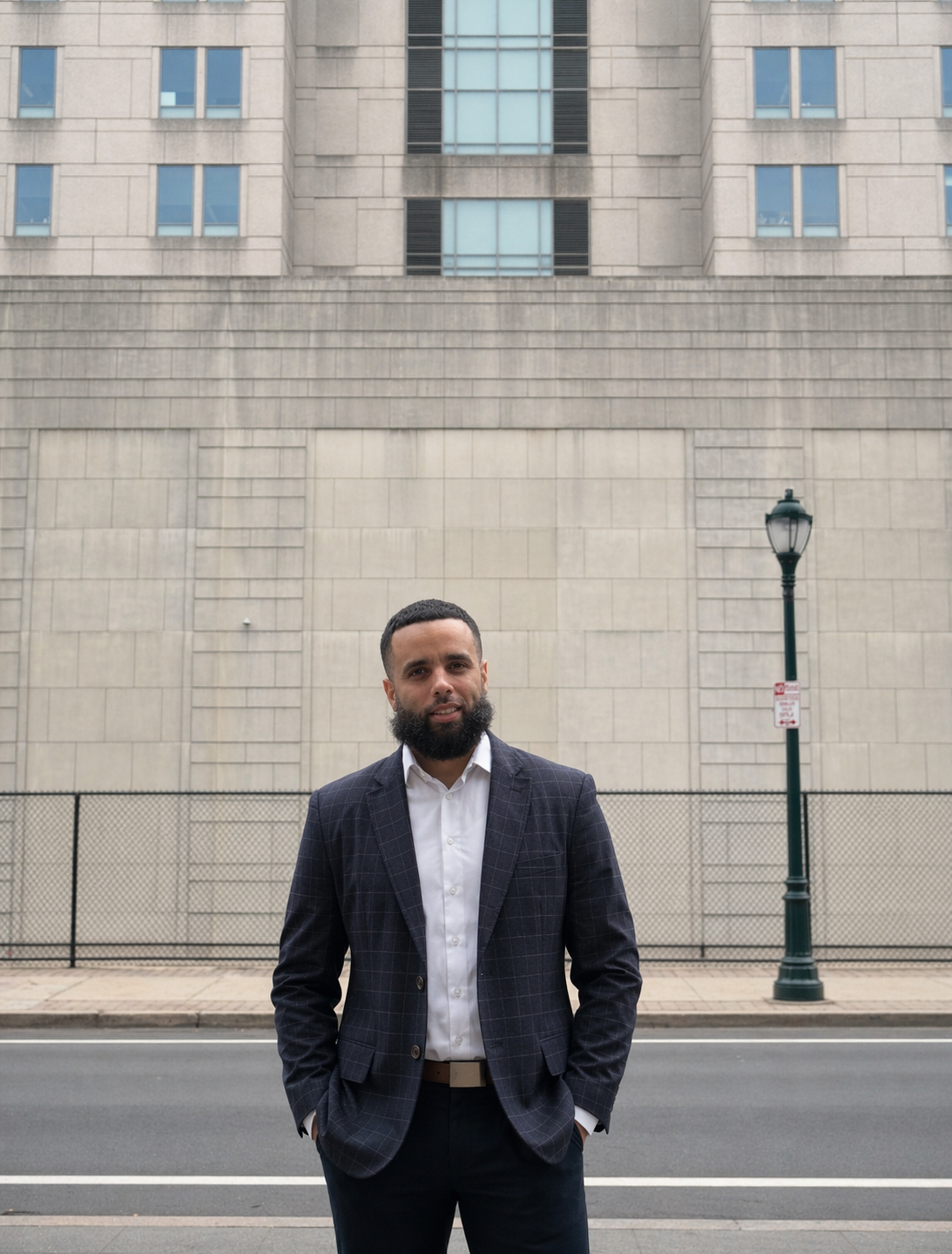
Philadelphia, PA — While two credit monitoring companies battle each other in federal court over trade secrets, stolen partners, and a disputed data transfer, the 115,000 consumers whose Social Security numbers, credit card information, and financial histories sit at the center of the dispute have had no voice in the proceedings — until now.
Joeziel Vazquez-Davila, CEO and founder of Credlocity Business Group LLC and a Board Certified Credit Consultant with 17 years of industry experience, has submitted a Motion for Leave to File Brief of Amicus Curiae — a friend of the court brief — in ConsumerDirect, Inc. v. MyFreeScoreNow.com, Inc. and Bruce Cornelius, currently pending before Judge Sunshine S. Sykes in the United States District Court for the Central District of California, Case No. 8:2026-cv-00988.
The filing is the first in this high-profile litigation to place consumers — not corporate interests — at the center of the legal analysis.
"Both companies have lawyers arguing about who owns the data and who stole what from whom," said Vazquez-Davila. "Nobody in that courtroom is talking about the people whose Social Security numbers are caught in the middle. Credit repair clients — already financially vulnerable, already fighting to rebuild — are being double billed, losing their monitoring access, and watching their credit repair process fall apart because two companies can't resolve a business dispute. That is not acceptable and the court needs to hear it."
Background: Two Lawsuits, One Missing Voice
The litigation began in March 2026 when ConsumerDirect, which operates the SmartCredit platform, filed suit in Orange County Superior Court alleging that MyFreeScoreNow (MFSN) and its founder Bruce Cornelius recruited a ConsumerDirect contractor as a double agent, used his access to ConsumerDirect's confidential partner database to poach over 750 business partners, and built a competing platform using ConsumerDirect's proprietary technology. ConsumerDirect estimates damages exceeding $21 million.
MFSN — which had operated a white label version of SmartCredit for nearly a decade under a contractual arrangement — responded by removing the case to federal court and simultaneously filing its own federal lawsuit seeking emergency relief. MFSN argues that ConsumerDirect is improperly withholding customer data that belongs to MFSN under their contract, preventing MFSN from transitioning its customers to a new independent platform. MFSN sought a Temporary Restraining Order compelling ConsumerDirect to return the data immediately.
Both parties framed the dispute in commercial terms: contract rights, trade secret ownership, and competitive advantage. Neither addressed what was happening to consumers in the meantime.
Consumer financial data is not a corporate asset. It is information held in trust for the people it describes — people who never signed the White Label Agreement and never consented to having their Social Security numbers used as leverage in a business dispute.
What the Brief Documents
Drawing on documented public statements from MFSN's own official partner Facebook group — the "MyFreeScoreNow Partners" community — the amicus brief presents evidence of consumer harm that does not appear in either party's filings.
The Legal Framework: Who Does the Data Actually Belong To?
The brief argues that both parties have fundamentally mischaracterized the nature of consumer credit data. MFSN's position that the data belongs to MFSN under Section 6.6 of its contract with ConsumerDirect conflates a contractual processing right with ownership. ConsumerDirect's refusal to return the data based on platform security concerns — security concerns whose legitimacy the brief examines skeptically in light of ConsumerDirect's pattern of simultaneous competitive solicitation of MFSN's customers — treats consumer data as an asset available for commercial leverage.
The brief cites the Fair Credit Reporting Act (15 U.S.C. § 1681), the Gramm-Leach-Bliley Act (15 U.S.C. §§ 6801-6809), and the California Consumer Privacy Act (Cal. Civ. Code §§ 1798.100 et seq.) as establishing that consumer credit data is not a conventional corporate asset but information held in trust for the consumers it describes, subject to rights those consumers hold independent of any contract between the businesses that process it.
The brief also raises a constitutional argument under the Ninth Amendment, citing Whalen v. Roe, 429 U.S. 589 (1977) — in which the Supreme Court recognized a constitutionally protected interest in avoiding disclosure of personal matters — and Ninth Circuit precedent recognizing privacy interests in Social Security numbers and financial information.
The Special Master Proposal
Recognizing that the court faces a difficult binary choice — order immediate transfer of sensitive consumer data to MFSN's disputed platform, or allow ConsumerDirect to continue holding it while simultaneously pursuing the consumers competitively — the brief proposes a third path.
Under Federal Rule of Civil Procedure 53, Vazquez-Davila asks Judge Sykes to appoint a neutral special master with data privacy and financial services expertise to take temporary administrative custody of the consumer data, oversee any transfer with independent security verification, receive input from industry stakeholders and consumer advocacy organizations, and monitor consumer billing during the pendency of the litigation. If MFSN is ultimately found liable in the litigation, the brief asks that the full cost of the special master be taxed against MFSN.
The consumers whose data is at issue in this case did not choose to be caught in the middle of this dispute. They are rights-holders. They deserve a court that sees them.
The Credit Repair Industry Dimension
The brief explains a critical structural fact about MFSN's subscriber base that neither party's filings adequately address. The vast majority of MFSN's 115,000 subscribers are not independent consumers who chose a credit monitoring service on their own. They are credit repair clients — financially vulnerable individuals enrolled in the service at the recommendation of their credit repair company, which needs monthly credit report access to track dispute results and document progress.
MFSN's own filings acknowledge that approximately 80 percent of its customers come through affiliate referrals from approximately 10,000 affiliate partners, the majority of whom are credit repair companies and credit consultants. This means that when MFSN's platform became unstable, the reputational damage fell not on MFSN but on the small businesses and individual consultants who had enrolled their clients in the service.
About the Motion for Leave
Because Vazquez-Davila is not a party to the litigation, he must first obtain the court's permission before his brief can be considered. The Motion for Leave to File Amicus Brief explains his qualifications, his distinct consumer advocacy interest, and why the brief offers the court analysis — including documented evidence of consumer harm and the special master proposal — that neither party has presented. The motion and brief have been transmitted to the chambers of Judge Sunshine S. Sykes and served on all counsel of record for both parties. Physical copies have been dispatched to the Clerk of Court.
Judge Sykes, who was nominated by President Biden and confirmed in May 2022, is the first Native American to serve as a federal district judge in California. Her career prior to the bench focused on public interest law representing vulnerable communities, including children in dependency proceedings and domestic violence survivors.
Frequently Asked Questions
Everything consumers, credit repair professionals, and media need to understand about this filing and its implications.
What is the ConsumerDirect vs. MyFreeScoreNow lawsuit actually about?
There are two related lawsuits now consolidated in federal court. ConsumerDirect filed in Orange County Superior Court in March 2026 alleging MFSN stole trade secrets, recruited a ConsumerDirect contractor as a double agent, used confidential partner data to poach over 750 business partners, and built a competing platform using ConsumerDirect's proprietary technology — worth an estimated $21 million in claimed damages. MFSN removed that case to federal court and simultaneously filed its own federal lawsuit seeking a Temporary Restraining Order. Both cases are before Judge Sunshine Sykes, Case No. 8:2026-cv-00988.
Were MFSN customers actually double billed?
Yes, and it is documented. Multiple MFSN partners posted about this in MFSN's own official partner community. Partner Danielle Guglielmi stated her clients were "being double and triple charged the monthly fee" and when they called for refunds they were told they cannot get one. Partner Cameron Webster reported his client signed up for the upgrade expecting the old account to be closed and instead got billed twice. Partner Anne Black documented charges on March 12 and again March 15 on the same account after completing the migration. These are public statements from identified credit repair professionals — not anonymous complaints.
Does consumer credit data actually belong to the consumers themselves?
The law increasingly says yes. The Fair Credit Reporting Act (15 U.S.C. § 1681) vests consumers with rights to access, dispute, and control use of their own credit information. The California Consumer Privacy Act (Cal. Civ. Code §§ 1798.100 et seq.) gives consumers the right to know what is collected, demand deletion, and limit use. The Gramm-Leach-Bliley Act (15 U.S.C. §§ 6801-6809) requires financial institutions to protect consumer financial data. The Supreme Court recognized a constitutional privacy interest in personal information under Whalen v. Roe, 429 U.S. 589 (1977). None of these frameworks allow consumer data to be held as a bargaining chip in a corporate dispute.
What is an amicus brief and why does it matter here?
An amicus curiae brief — Latin for "friend of the court" — is a legal document submitted by a non-party who has relevant expertise or a distinct perspective that might help the court. This filing matters because it is the only document in this litigation that directly represents consumer interests, presents documented evidence of consumer billing harm, and proposes concrete protective relief — the special master — that the court could order without deciding the full merits of the corporate dispute.
What is a special master and why is the brief asking for one?
A special master is a neutral professional appointed by a federal court under Federal Rule of Civil Procedure 53 to handle specific complex tasks. The amicus brief asks Judge Sykes to appoint a special master to take neutral custody of the consumer data, oversee any transfer with independent security verification, and monitor consumer billing. If MFSN is found liable, the brief asks the special master costs be taxed entirely against MFSN. Consumers bear none of the cost.
Why should credit repair companies care about this case?
Because they bore the cost of a dispute they had no role in creating. Roughly 80 percent of MFSN's subscribers came through credit repair company referrals. When MFSN's platform became unstable, credit repair companies suffered reputational damage and client losses — Curtis Tribble lost approximately 20 clients, Breonna Dejee lost 7, Holly Dickens could not get half her clients through mandatory password resets — and received no compensation.
Is Credlocity affiliated with MFSN or ConsumerDirect?
No. Credlocity Business Group LLC has no financial relationship, partnership, or affiliation with either MyFreeScoreNow or ConsumerDirect. The amicus brief is filed independently, in the public interest, on behalf of consumers and the credit repair industry.
How can affected consumers or credit repair companies get help?
Consumers who were double or triple billed should contact their bank or credit card issuer immediately to dispute unauthorized charges under the Electronic Fund Transfer Act (15 U.S.C. § 1693 et seq.). Credit repair professionals who suffered client losses should document those losses with dates and client details. Credlocity is available for consultation at admin@credlocity.com or 1500 Chestnut Street, Suite 2, Philadelphia, PA 19102.

Joeziel Vazquez-Davila founded Credlocity Business Group LLC in 2007 after being defrauded by a major credit repair firm — an experience that defined his consumer advocacy mission. Today Credlocity serves over 79,000 clients. He operates an investigative journalism practice that has contributed to regulatory actions and business closures affecting bad actors in the credit repair industry. He holds BCCC, CCSC, CCRS, and FCRA Certified Professional credentials and is a member of the National Association of Credit Services Organizations.
Transparency: Credlocity Business Group LLC has no financial relationship with either MyFreeScoreNow or ConsumerDirect. This press release was produced independently, in the public interest. | Corrections: To report a factual error email admin@credlocity.com with documentation.
About Credlocity Business Group LLC
Credlocity Business Group LLC, headquartered at 1500 Chestnut Street, Suite 2, Philadelphia, PA 19102, is an FCRA-certified credit repair organization founded in 2008 by Joeziel Vazquez. With 17 years of experience and more than 79,000 clients served, Credlocity provides FCRA-compliant dispute services, direct creditor negotiations, and pro se litigation against bureaus and furnishers that violate consumer rights. Joeziel Vazquez holds FCRA Certified, BCCC, CCSC, and CCRS credentials.
Start your free 30-day credit repair trial or view all Credlocity press releases.